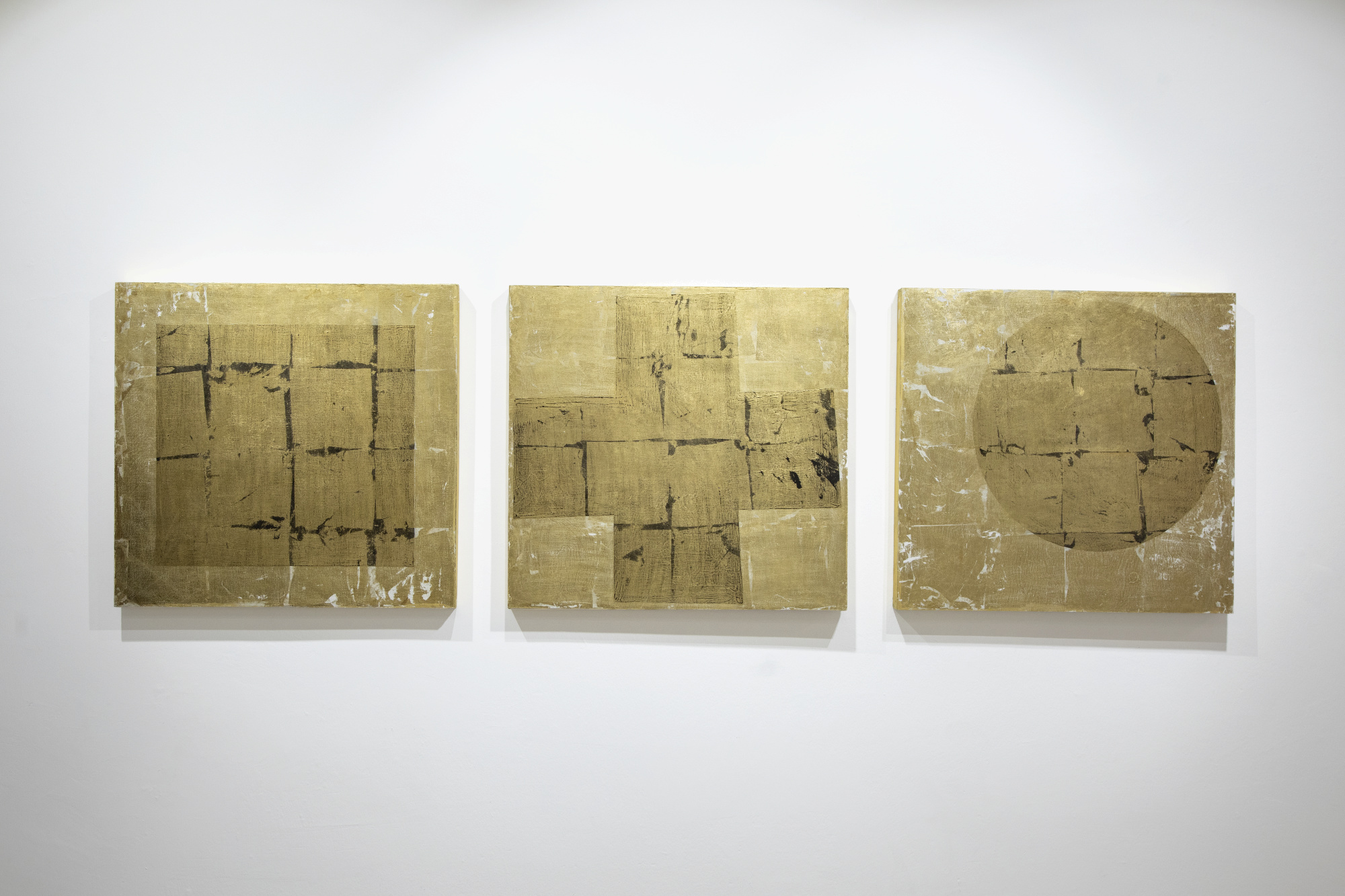
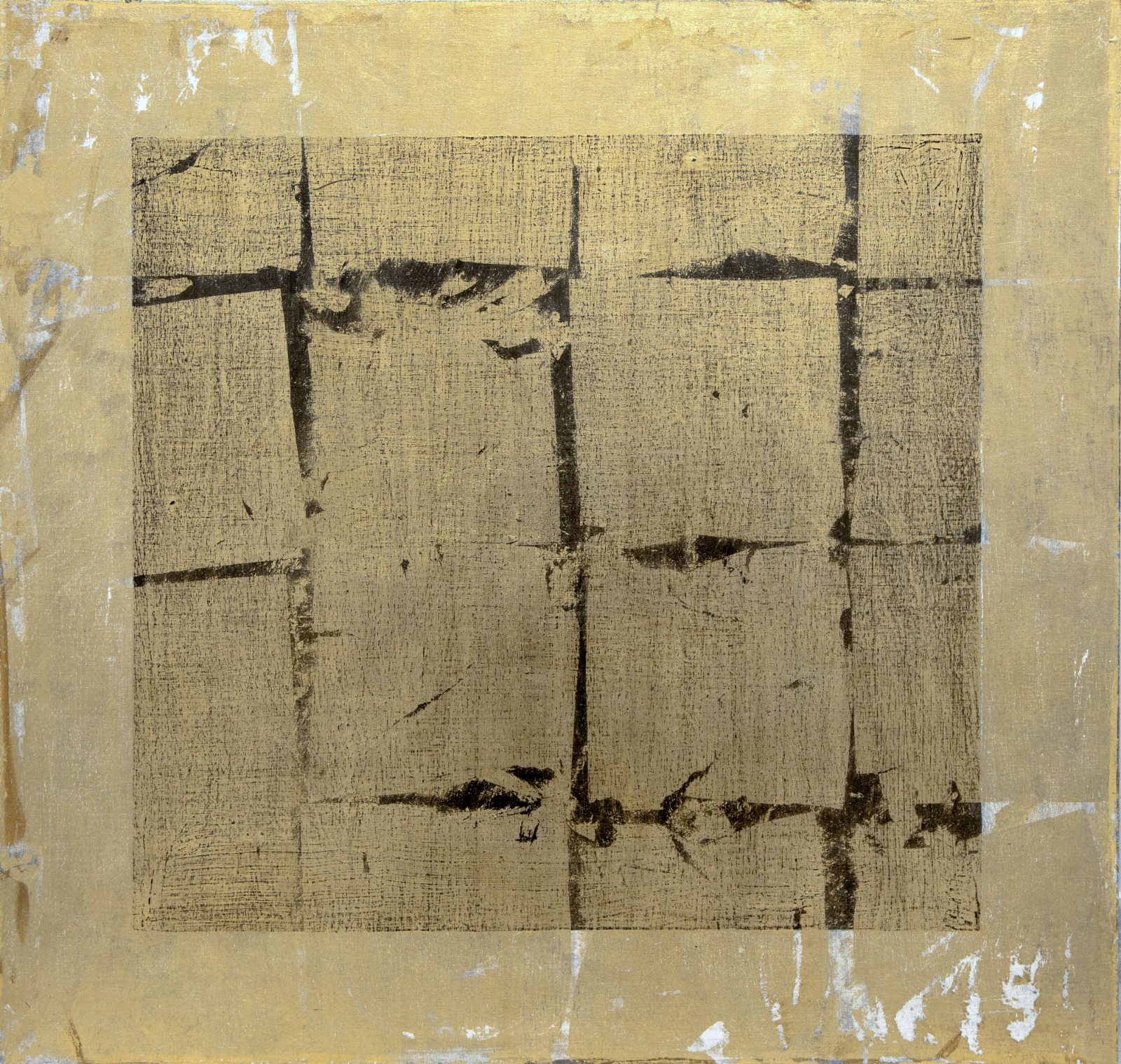
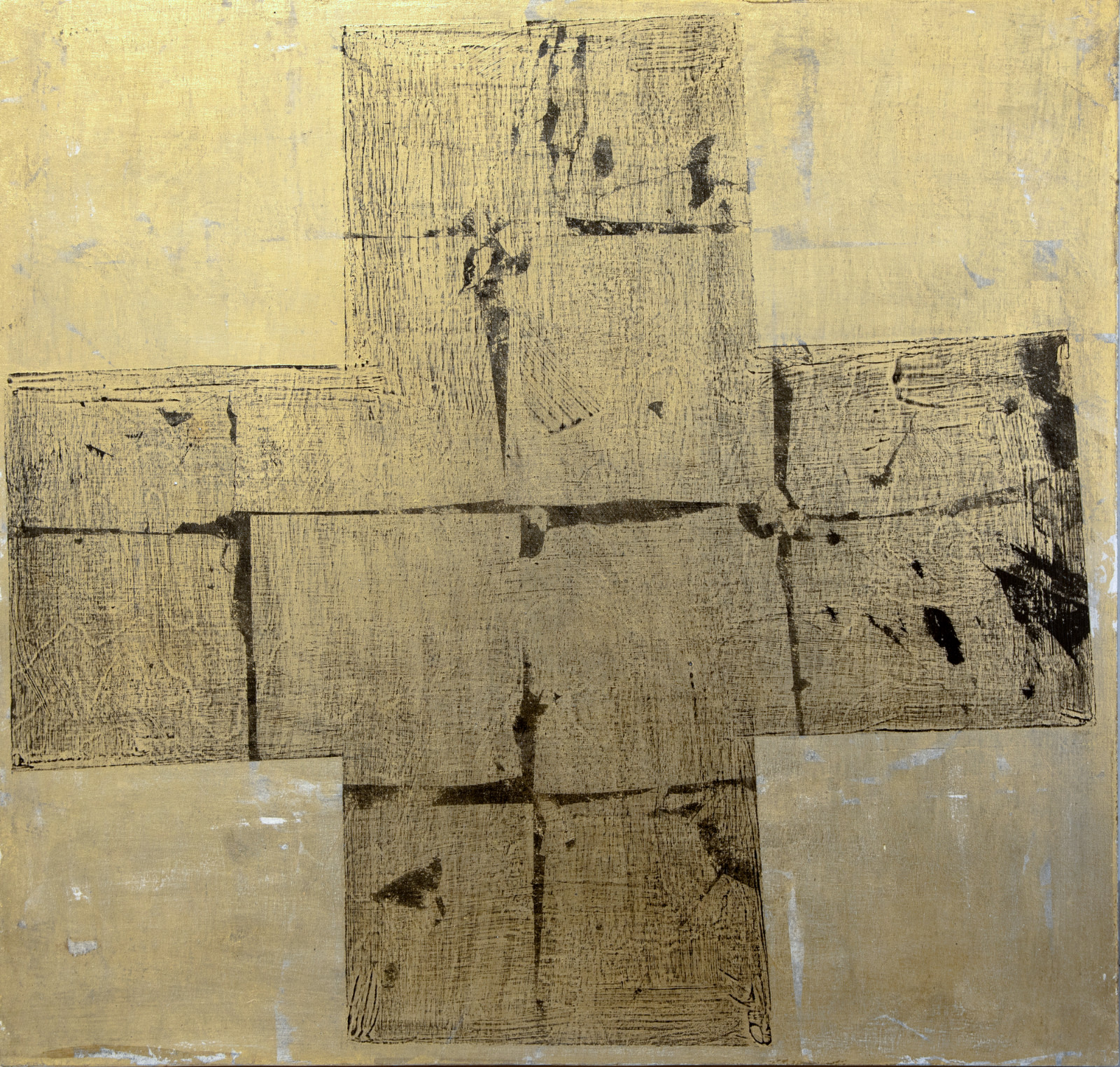
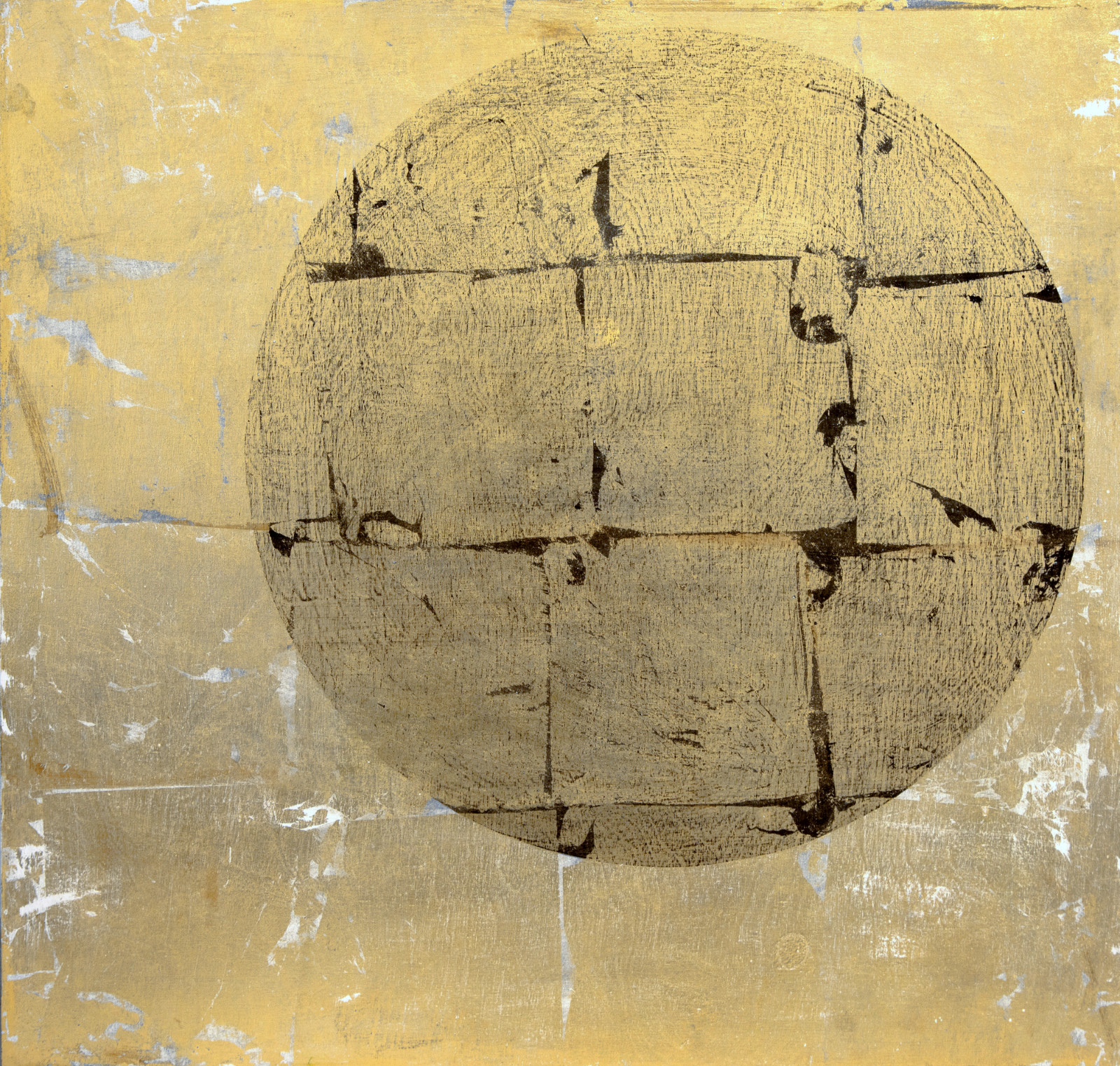
Terziev’s “Gold Leaf on Black Icons (After Malevich)” (2026) — a triptych composed of gold leaf and black-and-white acrylic on plywood—reintroduces the tension between the non-objective image and the sacred icon present in Malevich’s “Black Square”. Exhibited in 1915 in a high corner typically reserved for icons, Malevich’s work proclaimed a radical break with representation while preserving the transcendent’s spatial structure. Terziev embodies this contradiction; while the gold leaf evokes sacred radiance and auras, the triptych almost resembles a group of worshippers. Wear and tear, imperfect borders, and the plywood’s grain connect the transcendent to touch and labor. The black square is no longer the “zero point” of the painting; it is a recurring, unstable icon of art history, revisited after the image of the absolute beginning has been transformed into cultural memory.
Firat Arapoglu (excerpt from the curatorial statement on the exhibition Late Night Talks with My Modern Ancestors, Collect Gallery, Istanbul)